When your screens go dark, revenue and tenant visibility go dark with them.
When Lightbox exited the market in 2024, hundreds of digital displays across U.S. retail properties—including portfolios managed by major mall owners and operators such as CBL Properties and JLL Retail—were left without a functioning network behind them. While many screens remained physically installed, the systems that powered them were no longer operational. There was no content management, no monitoring, no support, and no reliable way to update or manage what shoppers were seeing.
For CBL Properties, this disruption created immediate operational and financial risk. Marketing teams lost a critical channel for tenant promotion and shopper engagement. Specialty Leasing teams lost digital inventory tied to advertising and ancillary revenue. Property teams had limited visibility into whether screens were active, accurate, or functioning at all.
What initially appeared to be a technical outage quickly revealed a larger challenge. CBL needed more than a vendor replacement. They needed a partner who could restore control quickly, stabilize operations without a costly rip-and-replace, and support a scalable, revenue-ready digital strategy across their portfolio.
That’s where TouchSource stepped in.
Background & Opportunity
The initial request may have sounded like “get the screens back online,” but CBL’s real need was broader: regain operational control and re-open revenue channels with confidence across its multi-property portfolio. They needed:
- Operational control: A system their teams could use without relying on a third party for every single update.
- Visibility and accountability: Monitoring, proof-of-play, and reporting so CBL’s team knew what was running and what value it was driving.
- Revenue enablement: The ability to support both direct and programmatic advertising in a structured, scalable way.
- Consistency across properties: A standardized platform that could work across multiple malls.
- Future flexibility: A foundation that could evolve into a lasting digital strategy, not just a temporary fix.
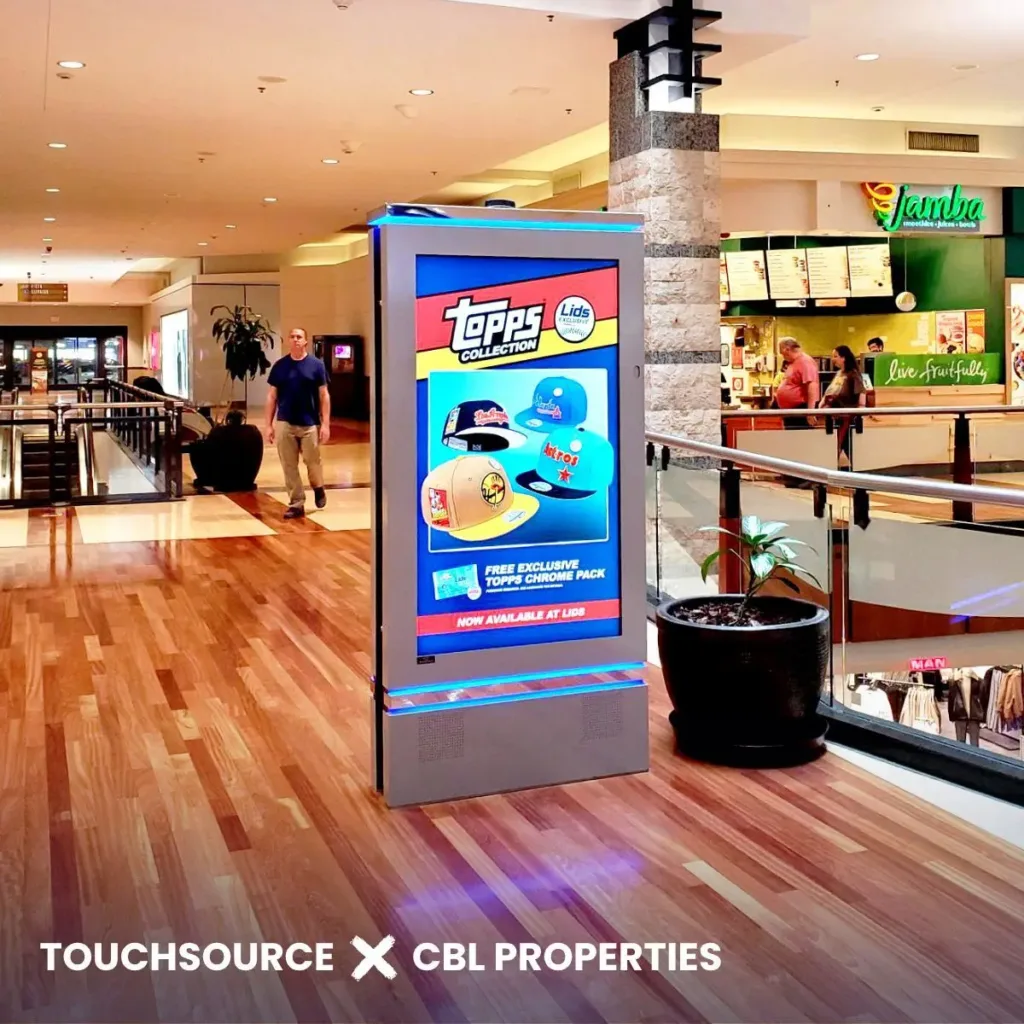
TouchSource met each of these requirements, reinforcing existing systems where feasible and upgrading the digital display network across 24 malls.
Project Scope
- Properties: 24 malls across the U.S.
- Hardware: 100 replacement displays, 224 media players
- Timeline:
- Orders finalized: May 30, 2025
- 23 properties deployed: July 2025
- Final property completed: December 2025
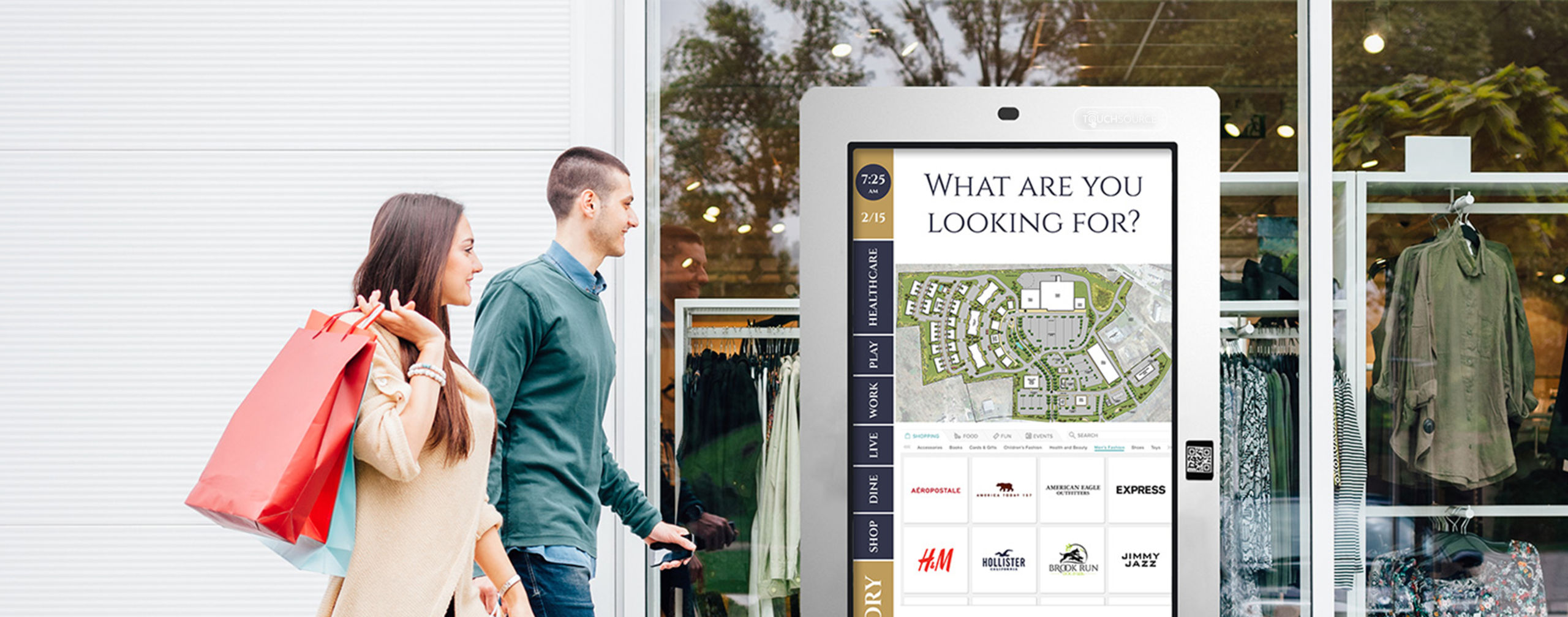
These installations included a combination of directory systems and mall digital kiosk applications designed to improve wayfinding, advertising delivery, and tenant visibility across high-traffic areas.
How This Was More Than “Just Replacing Screens”
This project stands out for both its scale and fast timeline. Key challenges included:
- High-volume logistics: Coordinating 224 media players and 100 displays under tight deadlines.
- Split shipping model: Media players were staged and tested in TouchSource’s warehouse, while displays were drop-shipped directly from the manufacturer.
- Site readiness coordination: Each mall required confirmation of delivery logistics, storage, and installation readiness for its mall digital kiosk infrastructure.
- Mixed-use environments: Directory and advertising units required precise configuration across varied digital signage solutions.
- Legacy system alignment: Existing Lightbox maps and orientations had to be translated accurately to preserve consistency.
- New technology integration: Early deployment of Visual Content Loop+ (VCL+) added capability while increasing complexity.
Why VCL+ (Visual Content Loop+) Mattered
VCL+ was a key unlock for CBL because it addressed one of the biggest hidden challenges in digital signage: Content prioritization and control across multiple stakeholders. Rather than relying on static playlists, VCL+ enabled CBL to actively manage screens as a coordinated media channel. Benefits of VCL+ include:
- Dynamically prioritize content: Leasing, marketing, and advertising content could coexist without competing blindly.
- Balance revenue vs. experience: Paid media runs effectively while still supporting tenant promotion and property messaging.
- Standardize loops across properties: Consistency in how content is delivered portfolio-wide.
- Adjust in real time: Teams can react to campaigns, events, and seasonal needs without rebuilding entire playlists.
Behind the Scenes: Staff & Coordination
According to Kyle Ballard, Install & Field Coordinator at TouchSource, this rollout was executed with 20 dedicated tech teams across 24 sites nationwide.
“From a coordination standpoint, this was one of the smoothest large-scale deployments we’ve run,” Kyle said. “We had strong alignment between warehouse staging, field installers, and project management. Every mall digital kiosk installation required precision, but the process held together because of the structure behind it.”
While public execution was seamless, internal teams managed minor audio integration exceptions, connecting to legacy systems outside standard digital signage solutions scope when required.
Who TouchSource Helped (and How)
This transition wasn’t just a technology fix. It restored critical capabilities for multiple teams across the organization.
- Marketing teams: Regained control of property messaging, promoted tenants/events/campaigns in real time, and gained a more modern, flexible content platform.
- Specialty Leasing teams: Re-established digital inventory for advertisers, enabled both direct deals and programmatic revenue, and created a scalable media product across properties.
- Property Management / Operations: Reduced the burden of managing unreliable systems, gained proactive monitoring and support, and restored confidence that the network was functioning without constant oversight.
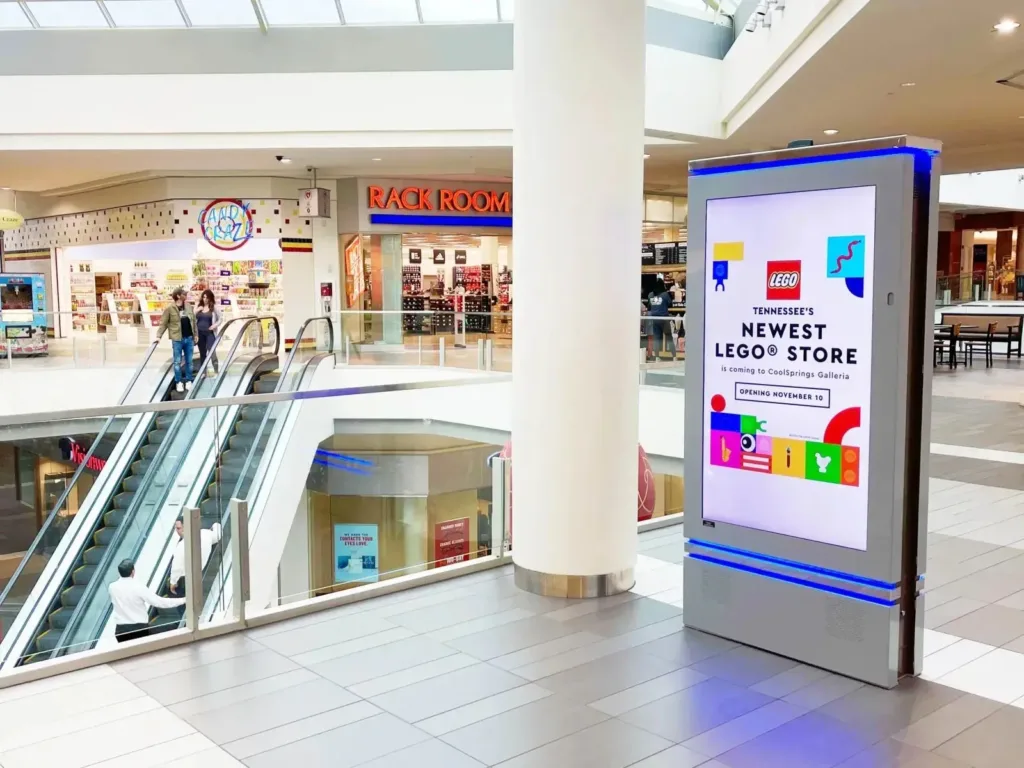
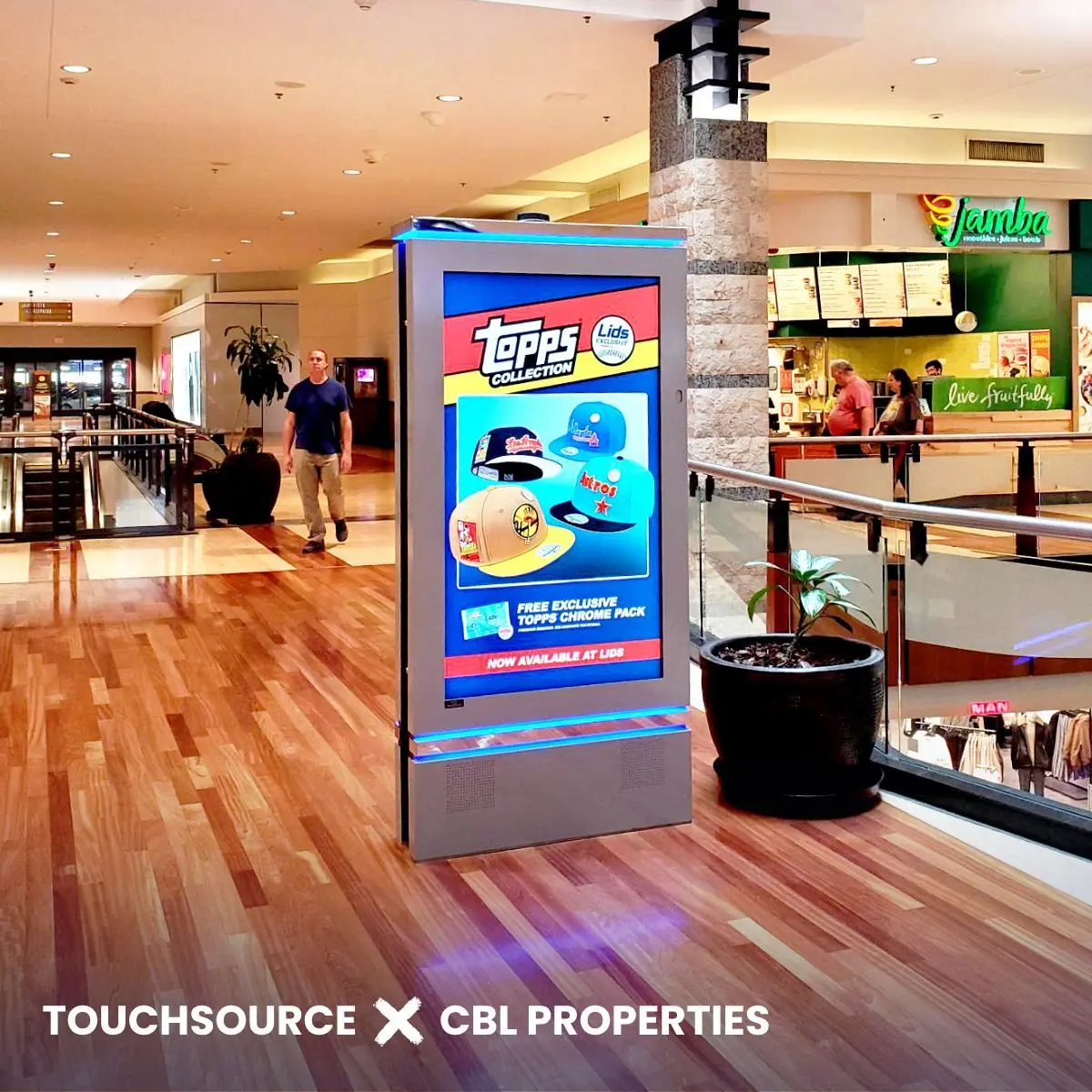
Mall Digital Kiosk at CBL Properties
Project Management & Execution
Success came from disciplined coordination and repeatable processes:
- Staging & QA: Media players were batch-configured and tested before shipment.
- Centralized tracking: Standard naming conventions and asset organization ensured consistency across all properties.
- Cross-functional alignment: Regular check-ins kept engineering, logistics, and field teams in sync.
- Adaptability: Teams adjusted quickly to meet aggressive timelines and accommodate unique site requirements.
Results & Impact
This deployment delivered immediate stabilization and long-term momentum:
- Immediate benefits:
- Screens brought back online quickly, often using existing hardware where feasible.
- Restored communication and marketing capabilities for tenant promotion, events, and property messaging.
- Reopened revenue channels that had gone dark for digital advertising.
- Replaced uncertainty with a supported, accountable system.
- Long-term value:
- Transition from just “screens” to a true portfolio-level digital network.
- Consistency and scalability across 24 properties, supported by standardized processes and governance.
- A foundation for ongoing revenue growth through DOOH, including direct and programmatic opportunities. Better alignment across marketing, leasing, and operations, which were supported by VCL+ content prioritization.
Key Takeaway
This project highlights TouchSource’s ability to step in during disruption, stabilize a distributed network quickly, and then deliver complex, multi-site digital signage solutions with precision, adaptability, and cross-functional coordination. From engineering to staging to field installation, every team played a role in turning a portfolio-wide outage risk into a scalable mall digital kiosk and media network.
What started as a disruption became an opportunity. Lightbox’s exit forced CBL to reevaluate not just their technology, but their broader digital strategy. Instead of simply replacing a vendor, CBL moved toward an integrated, scalable platform that supports both shopper experience and revenue growth.